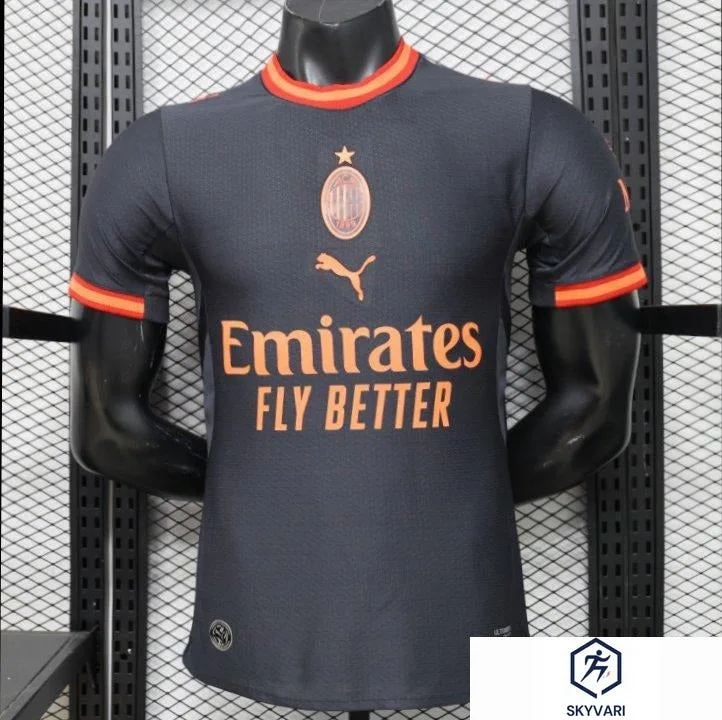
Let's talk about AC Milan retro jersey history, because if you're going to spend your hard-earned cash on a piece of Rossoneri past, you need to know what you're actually buying. I've been collecting Milan shirts for years, and I've made plenty of mistakes along the way — wrong sizes, dodgy fakes, the lot. So here's a practical guide to help you avoid the same traps and end up with a jersey you'll actually wear, not just frame.
First up: know your eras. Milan's retro history is deep, from the classic 1960s shirts with the simple round collar to the iconic 1980s and 90s designs by Kappa and Lotto, right through to the Adidas era. If you're after a specific player or season, do your homework on the badge and sponsor. Early shirts had the scudetto shield and a simple wordmark, while later ones feature the Opel or Motta sponsors. The devil's in the details — literally. Check the collar shape, the sleeve trim, and the fabric. A genuine 1990s shirt will feel heavier and have a distinct texture compared to modern replicas. Don't just go by the photos; look for close-ups of the stitching and the inner label.
Sizing is where most people slip up. Retro shirts fit differently — they're often boxier and shorter than modern athletic cuts. A vintage size Large might fit like a modern Medium, so always ask for pit-to-pit and length measurements if you're buying online. If you're going for a player version, remember those are cut even slimmer for on-pitch wear. Fan versions are more forgiving and better for everyday wear. My advice? Measure a shirt you already own and love, then compare. And don't trust the tag alone — a 1990s Umbro Large is not the same as a 2020s Puma Large.
Now, fan vs player version. Player versions (often called 'authentic' or 'match') are what the pros wear: lighter fabric, laser-cut ventilation, and a tighter fit. They're brilliant for collecting but can be uncomfortable for casual wear, and they cost more. Fan versions are the replica shirts sold to supporters — slightly heavier, looser, and usually better value. For retro shirts, the distinction gets blurry because older player versions were often made of heavier materials anyway. If you're buying a 1990s shirt, it's likely a fan version unless you've got deep pockets and a trustworthy seller. Just be aware that some sellers slap 'player issue' on anything to bump the price.
Common mistakes to avoid: buying without checking the wash label (retro shirts can shrink or fade), ignoring the sponsor's condition (peeling sponsors are a nightmare to fix), and falling for 'rare' claims without proof. Also, be wary of shirts with modern badges on vintage designs — that's a classic fake tell. And please, don't iron the badge directly. If you're buying from a marketplace, ask for a photo of the inner label and the code on it. Cross-reference with collector forums. Finally, don't overpay for a shirt just because it's old — condition matters more than age. A mint 2007 shirt is worth more than a battered 1994 one.
At the end of the day, AC Milan retro jersey history is about more than just fabric — it's about the memories. Whether you're chasing a Van Basten-era classic or a Kaka-era gem, take your time, ask questions, and buy from sellers who know their stuff. Get it right, and you'll have a shirt that feels like it's been waiting for you. Forza Milan.
Shop AC Milan Kits
Browse our full AC Milan collection — fan and player versions, kids sizes, all at wholesale prices.