Someone over on r/SoccerJerseys lined up three France away shirts side by side and asked the internet to tell them apart: a replica player version on the left, a Nike player version in the middle, and a Nike fan version on the right. The whole point was a warning about buying resale. The replies immediately fell into the argument every kit collector has had at least once, which is what the difference between these shirts even is. One person joked that a French shirt had been knocked off by an Englishman. Another insisted the badge material gives it away, because the heat-pressed patch looks cleaner up close than a stitched rep. A third pointed out that player versions aren't stitched at all, they're rubberised heat-applied patches. And somewhere in there, someone just wanted Nike to restock the player version because they loved the material details.
That thread is worth taking seriously, because France away shirts are some of the most bootlegged kits on the market. They're popular, they're clean, and the fakers have had years of practice. Here's what the thread got right, what it missed, and how to actually protect yourself.
First, learn the three shirts
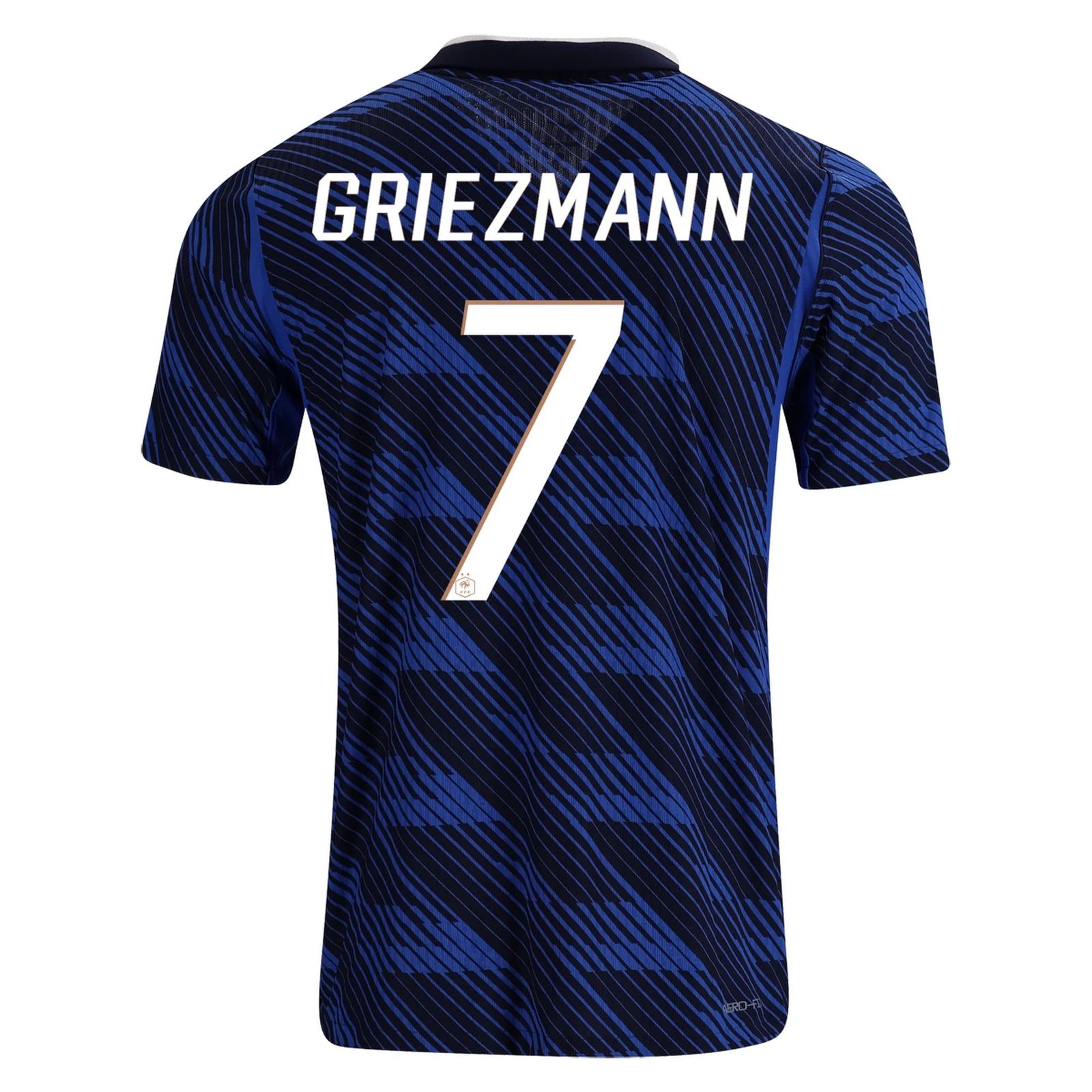
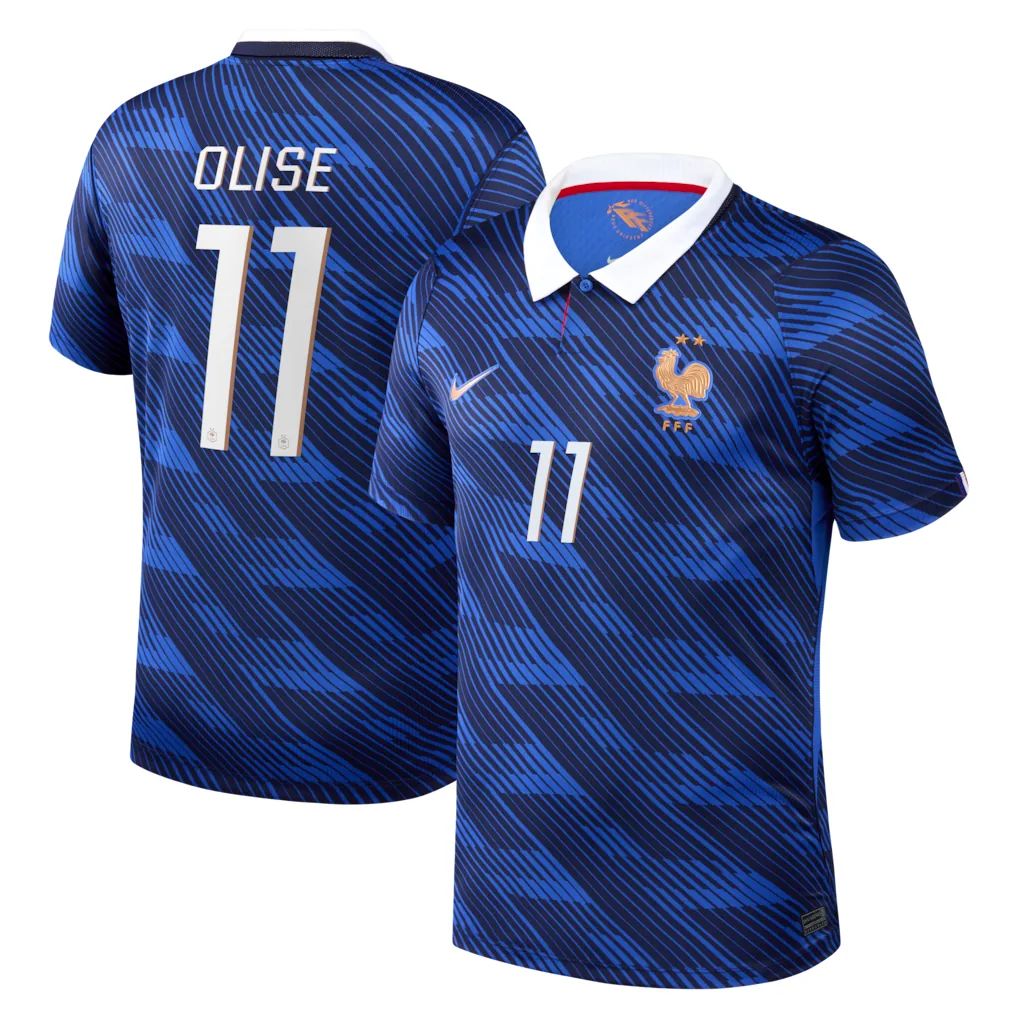
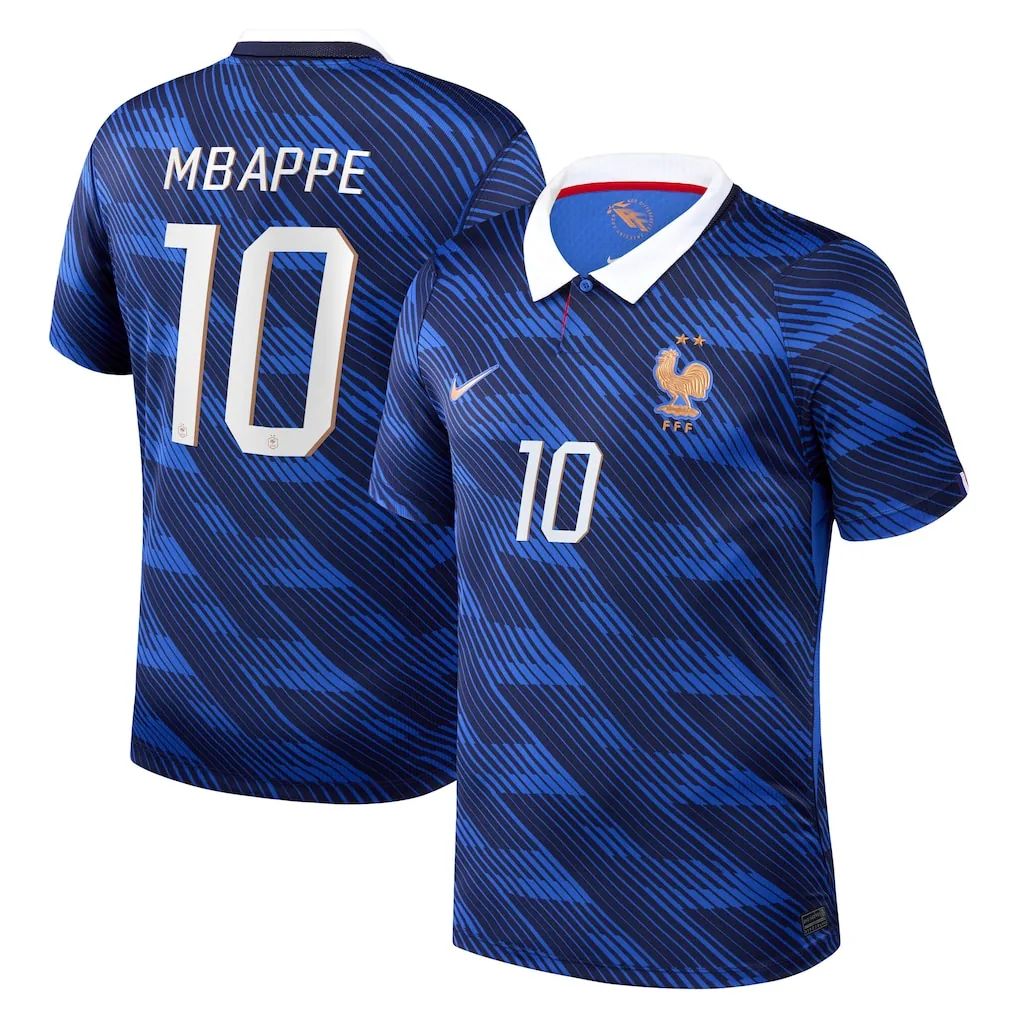
Before you can spot a fake, you need to know what the real options are. Nike sells France away in a fan version and a player version, and the player version is the one people get confused about. The fan version is the shirt built for the terraces and the sofa: a bit roomier through the body, a standard fabric, a woven club badge, and a printed sponsor where there is one. The player version is cut slim and athletic, uses a lighter engineered fabric, and the badge and swoosh are typically heat-applied rather than stitched. That's the detail the thread kept circling.
The third shirt in that comparison, the replica player version, is the awkward one. It's a shirt that copies the player version's look without being the real thing. The badge is often stitched or glued on badly, the fabric feels heavier, and the fit sits somewhere between the two real shirts. If a seller is vague about which of the three you're getting, walk away.
The badge is the tell, but not the way most people think
The most useful comment in the thread was the one correcting the badge myth. People assume a stitched badge means quality and a heat-pressed one means knockoff. For France player versions it's the opposite: the authentic shirt uses a rubberised, heat-applied badge, and the fakes often go for stitching because it's easier to fake. So a stitched badge on a shirt sold as a player version is a red flag, not a selling point.
Check the edges of the heat-pressed patch. On a real one the badge sits flat and clean, with no bubbling at the corners. On a rep it lifts, or the glue bleeds, or the crest looks slightly puffy. Run a thumb over it. If it feels like a sticker that's been warmed up, be suspicious. The same goes for the swoosh and any tournament or competition patches.
Know the kits you're actually buying
France away shirts have a habit of becoming grails. The 2018 World Cup away shirt, the pale one with the faint graphic pattern, is now one of the most sought-after France kits of the modern era, and it's faked constantly. The 2022 away shirt got a mixed reception at the time and has quietly become a favourite since. If you're chasing either, know the exact season and the exact details before you start comparing listings, because fakers rely on buyers who only half-remember the shirt.
The 2018-19 away is a good example. It's a shirt people remember as plain and clean, but the real thing has subtle detail that's easy to get wrong when copying. Learn the collar, the badge placement, the cut of the sleeve, and the exact shade. Then look at the listing photos with that in your head. If the seller only shows one angle, or the photos are suspiciously low resolution, that tells you something.
Practical advice before you pay
Ask for the wash label and the inner neck tag, not just the front. Fakers nail the front and get lazy on the labels. Ask for a photo of the badge up close, in daylight, with no filter. Ask which version it is, fan or player, and see whether the answer matches the price. A player version going for fan-version money is not a bargain, it's a warning.
Fit matters too. Player versions run slim and short, so if a seller describes a player version as a relaxed fit, question it. And if you're buying a used shirt, ask how it's been washed. Heat-applied badges don't love a hot wash, and a badge that's been through the dryer a few times will tell you a lot about how the shirt was treated.
The restock problem
The most honest complaint in the thread was the simplest: the player version needs a restock. Nike's player-version runs of France shirts sell out fast and resale prices climb, which is exactly the environment fakes thrive in. If the real shirt is hard to get, the bootleg fills the gap. That's not a reason to buy the fake, but it is a reason to be patient, set an alert, and buy from a source you trust rather than panic-buying from a resale listing with three blurry photos.
The takeaway
The thread's instinct was right: be careful out there. But the takeaway isn't that player versions are stitched or that fan versions are always safe. It's that the badge type, the fit, the labels and the price all have to line up, and if any one of them is off, don't buy. A France away shirt is worth waiting for the real thing.
Read next
- Can you stack promo codes on a France away kit? What fans need to know
- Buy France Jersey Online Cheap: A Fan's Guide to Getting It Right
Shop France shirts
Current France shirts — fan and player versions, honest pricing.
This piece started from a fan discussion on r/SoccerJerseys and was expanded with our kit desk's take.