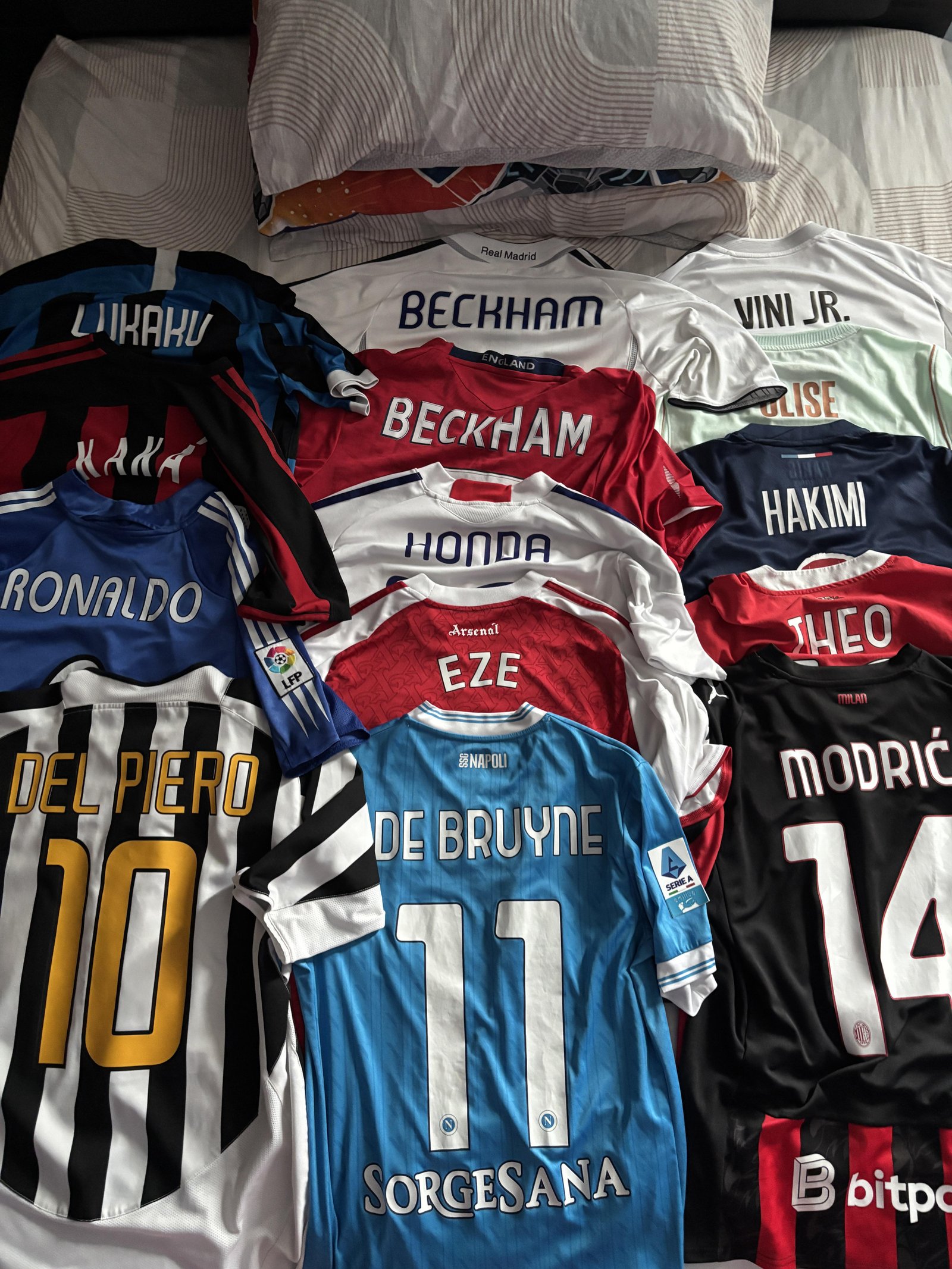
Someone over on r/SoccerJerseys posted a photo of their shirts and asked for a score out of ten. The collection was built the way most of ours were: pickups from trips abroad, the odd online order, everything in a size M because the shirts actually get worn. The replies split exactly how you'd expect. Plenty of love for the modern names on the back, a few people calling the whole thing iconic, and one reply that quietly told the real story. That fan had bought a pile of fakes in Turkey and elsewhere, sold the lot, and started again from zero with decent replicas.
That last comment is the most useful thing in the thread, and nobody picked up on it. Rating a collection by the names on the back is the easy game. Rating it by what the shirts actually are is the one worth playing.
What a Score Out of Ten Actually Measures
A number out of ten tells you almost nothing. Two collections can both score eight and be completely different objects. One is twelve modern replica shirts, all bought new, all size M, all with a current player's nameset on the back. The other is nine shirts picked up slowly, some of them twenty-five years old, some of them player version, none of them bought because a YouTube video told them to.
The first collection is fine. It's what most of us start with, and it's how you learn what you actually like. The second one took years and a lot of near-misses. If you're asking strangers to rate your shirts, ask them to rate the thinking behind each one instead. Why that club? Why that season? Why that player? A collection where you can answer those questions for every shirt is a good collection whatever the number.
The Fake Problem Nobody Wants to Talk About
The fan who sold their Turkish-market fakes and restarted deserves more credit than the thread gave them. Bootleg shirts are the fastest way to waste money in this hobby, and the market is full of them. You see them at holiday markets, on resale apps, and increasingly in listings that use photos of the real thing.
Learn the tells before you spend. Check the crest stitching, because real crests are tight and even, while fakes are lumpy or glued. Look at the inner neck label and the wash tags, since replicas from the big makers have consistent codes and fakes usually don't. Feel the fabric: player version shirts are noticeably lighter and more perforated than fan version ones, and a seller calling a heavy shirt a player issue is telling you something. And be suspicious of any 1990s or 2000s shirt that looks brand new, because time leaves marks on fabric and a thirty-year-old shirt with no wear is either a reissue or a fake.
Selling off your fakes and starting again is not a failure. It's the cheapest lesson you'll get in this hobby.
Shirts Worth Chasing Instead of the Obvious Ones
The thread's favourites were the current big names, which is fair enough. But the shirts that hold a collection together are usually the ones nobody else is hunting. Think of something like the 2014-15 Werder Bremen home with that deep green and the white collar, or the 2002-03 Parma home with the yellow and blue cross chest band. Neither is a grail in the usual sense, and both are more interesting on a hanger than another generic big-club home.
International shirts are where the value hides too. The 2006-07 Denmark home with the red and white halves is a genuinely strange design that most collectors skip past, and the 2012-13 Bosnia and Herzegovina home, worn in their first major tournament qualifying run, is a proper piece of history for anyone who followed that side. A 2010-11 Ghana home with the star crest is another one that gets overlooked because it isn't from a traditional power.
None of these need a famous nameset to work. Blank backs are fine, and often better, because the shirt itself is doing the talking.
Buying Advice for a Collector Still Building
If you're a teenager building a collection, spend your money on fewer, better shirts. One genuine 1998-99 shirt you've checked properly beats three cheap modern replicas you'll stop wearing in a year. Buy the size you actually wear, since a collection of shirts that don't fit is a collection of objects rather than clothes, and the whole point is wearing them.
On sizing, know that player version shirts run tighter than fan versions of the same shirt. If you're a comfortable M in a stadium shirt, you might need an L in player issue from certain makers and certain eras. Ask the seller for flat measurements rather than trusting the label.
And keep a record. A note of where and when you got each shirt, and what you paid, is worth more later than you'd think. It's also the fastest way to spot that you've been buying the same kind of shirt over and over.
Wear Them, Don't Archive Them
The detail in that original post that got buried is that the shirts are size M because they get worn a lot. That's the right instinct. A shirt that lives in a drawer in a plastic sleeve is a nice thing to own, but it isn't a football shirt anymore. The 2016-17 shirts with their lighter fabrics and the 1990s cotton-heavy ones were both made to be sweated in.
Rotate them. Wear the good ones to matches, to the pub, to nothing in particular. The wear is part of the story, and a shirt with a faint mark on the sleeve from a day you remember is worth more to you than a mint one you never touched.
Frequently Asked Questions
Straight answers
How can I tell if a football shirt is fake?
Start with the crest, the inner neck label, and the wash tags. Real crests are stitched tightly and evenly, and the codes on the tags should match the shirt's era and maker. Feel the fabric too, because player version shirts are lighter and more perforated than fan versions. If a shirt from the 1990s looks completely unworn, be suspicious.
Is it better to buy one expensive shirt or several cheap ones?
For a young collector, one genuine shirt you've checked properly is usually the better buy. Cheap replicas pile up and stop getting worn, while a single good shirt from a season you care about stays in rotation for years. You can always add volume later.
Do player version shirts fit differently from fan versions?
Yes, and it catches people out. Player version shirts are cut tighter through the chest and body, so a fan version M can feel like an L by comparison. Ask sellers for flat measurements across the chest rather than trusting the size on the label.
Should I put a nameset on a blank shirt?
Only if the player and season genuinely mean something to you. A correct nameset from the right era adds to a shirt, but a modern name slapped onto an old design looks wrong to anyone who knows. Blank backs are perfectly respectable, and often safer.
This piece started from a fan discussion on r/SoccerJerseys and was expanded with our kit desk's take.